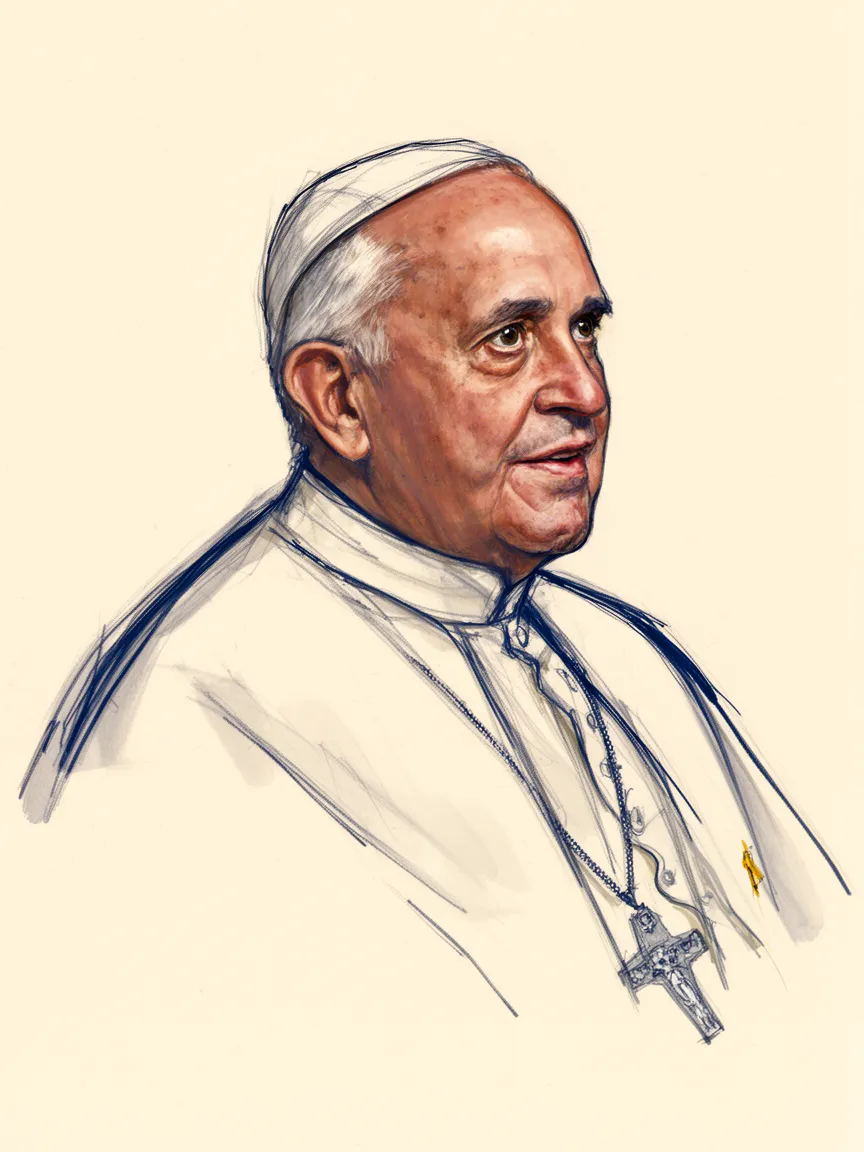
Pope Francis on Synodality
Pope Francis strongly advocates for synodality as a fundamental element and the necessary style for the Church in the third millennium, describing it as a "walk together" that the Lord expects. He envisions a synodal Church at every level where all members listen to and learn from one another, actively taking responsibility for proclaiming the Gospel. This concept is seen as the most appropriate framework for understanding the hierarchical ministry itself within the Church's communion structure.
Francis stresses that true synodality requires moving beyond mere external appearances; it cannot be reduced to formalism or just an extraordinary event. For it to be authentic, the Church needs concrete content, means, and structures that foster genuine dialogue and interaction, particularly between the laity and the clergy. This process involves the entire People of God undertaking an ecclesial journey with the Holy Spirit as its soul, which is essential for discerning God's will.
The Pope explicitly links synodality to mission and ecumenism, seeing it as a way to channel the prayers, experiences, and intuitions of Catholics globally into better methods of sharing the faith. While emphasizing listening and consensus, he maintains that any resulting decisions must respect the deposit of faith and the living tradition, ultimately requiring verification by the appropriate level of Church authority.
Context
The concept of synodality relates to the Church's structure and functioning, drawing from the Greek word synodos, meaning 'journeying together.' Pope Francis has made this a central theme of his pontificate, aiming to promote a more collegial and inclusive experience within the Church, moving away from purely hierarchical decision-making models.
This emphasis is seen as a continuation of the spirit of the Second Vatican Council, which called for a renewal of the Church's life and mission. The ongoing Synod on Synodality is the most significant concrete manifestation of his commitment to embedding this principle into the ongoing life and governance of the Church globally.
Actions Taken
- Initiation of ProcessOfficially opened the synodal process at the Vatican, beginning the diocesan phase of listening and consultation across the Church.
- Inclusion/Procedural ChangeAnnounced that women would be allowed to vote at the Sixteenth Ordinary General Assembly of the Synod of Bishops, a first for any Catholic Synod of Bishops.
- Synod Conclusion ProtocolRatified and published the final document of the Synod on Synodality instead of issuing a post-synodal apostolic exhortation, setting a new precedent.
Key Quotes
The synod wants to be an experience of feeling ourselves all members of a larger people, the holy and faithful people of God, and thus disciples who listen and, precisely by virtue of this listening, can also understand God's will, which is always revealed in unpredictable ways.
Speaking of a 'Synod on Synodality' may seem something abstruse, self-referential, excessively technical, of little interest to the general public, but it is “something truly important for the Church.”
If we want to speak of a synodal Church, we cannot remain satisfied with appearances alone; we need content, means, and structures that can facilitate dialogue and interaction within the People of God, especially between priests and laity.
This is synodality, which we would like to make a daily habit in all its expressions.
Sources5
Synods and synodality: Pope Francis' method and vision for the church
* This is not an exhaustive list of sources.