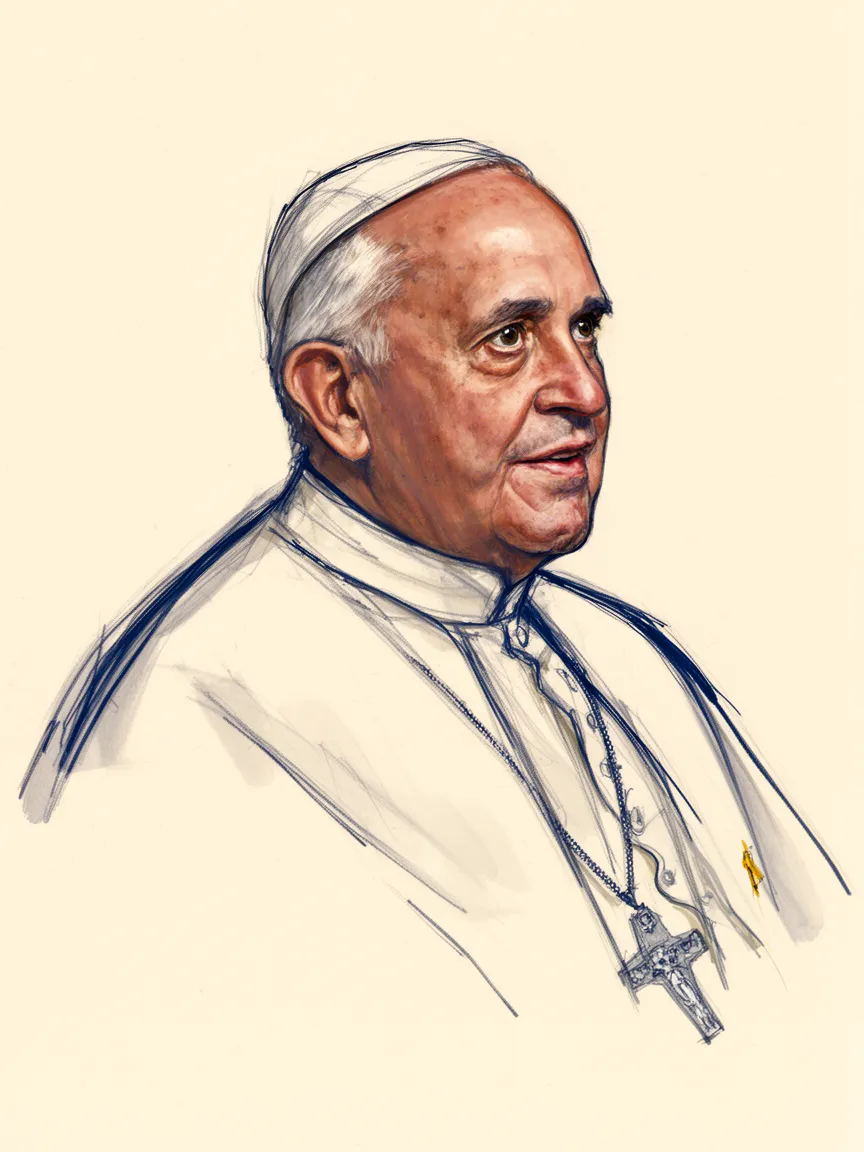
Pope Francis on Women in the Church
Pope Francis maintains a nuanced position regarding women in the Church, characterized by firm resistance to ordination in the priesthood or diaconate, which he has stated is a closed topic theologically. Despite this, his pontificate has seen a significant advancement of women into high-level administrative and governance roles within the Roman Curia.
He views the Church as fundamentally "female" and has called for a deeper theological reflection on womanhood, criticizing the Church's historical "masculinizing." This push for greater female influence is seen in his actions, such as appointing women to lead Vatican departments and granting them voting rights in the Synod of Bishops, aiming to move them from mere decorative additions to substantial partners in governance.
His reforms, particularly the 2022 reorganization of the Roman Curia, officially separated governance authority from sacramental orders, allowing laypersons, including women, to head dicasteries. This approach underscores his belief that administrative roles do not require ordination, though critics argue that true equality remains blocked by the ban on sacramental ministry.
Actions Taken
- Key Vatican AppointmentsAppointed the first woman Prefect of a Vatican dicastery and the first woman President of the Vatican City State's government.
- Synod ReformGave women the right to vote in the Synod of Bishops for the first time, with full member status in the 2023 Synod on Synodality.
- Ministry RecognitionFormally recognized lay ministry roles, such as lectors and acolytes, to women through the 2022 Apostolic Constitution Praedicate Evangelium.
- Vatican AdministrationAppointed women to significant administrative roles, including undersecretaries in the Secretariat of State and the Dicastery for Promoting Integral Human Development.
Key Quotes
The Church is female... One of our great sins has been masculinizing the Church. And this is not resolved through ministerial means, that's another thing.
the door is closed” on the issue of women's ordination to the priesthood.
When women are in charge, things go well!
Criticism
Argues that the continued ban on women priests is rooted in misogyny and that Pope Francis has a 'blind spot' regarding giving women 'justice.'
Point to his opposition to female ordination as a contradiction to his stated support for greater female involvement, suggesting his approach does not truly challenge the patriarchal structure.
Note that despite acknowledging abuse against nuns, the fundamental power structure remains, and women 'don't have voices' without access to ordained roles.
Comparison
Pope Francis's approach to women in the Church contrasts with previous pontificates primarily in the granting of administrative authority and participation in synods, while maintaining continuity on the issue of ordination.
- Ordination: He firmly holds the line established by St. John Paul II, who in 1994 stated that women's ordination to the priesthood was not up for debate, a stance Francis reiterates.
- Governance: Francis's reform of the Roman Curia in 2022 formally separated governing power from holy orders, allowing laywomen to lead dicasteries, which represents a significant structural change in administrative roles compared to his predecessors.
Sources7
Pope Francis Describes Not Ordaining Women Priests as 'A Theological Problem'
* This is not an exhaustive list of sources.