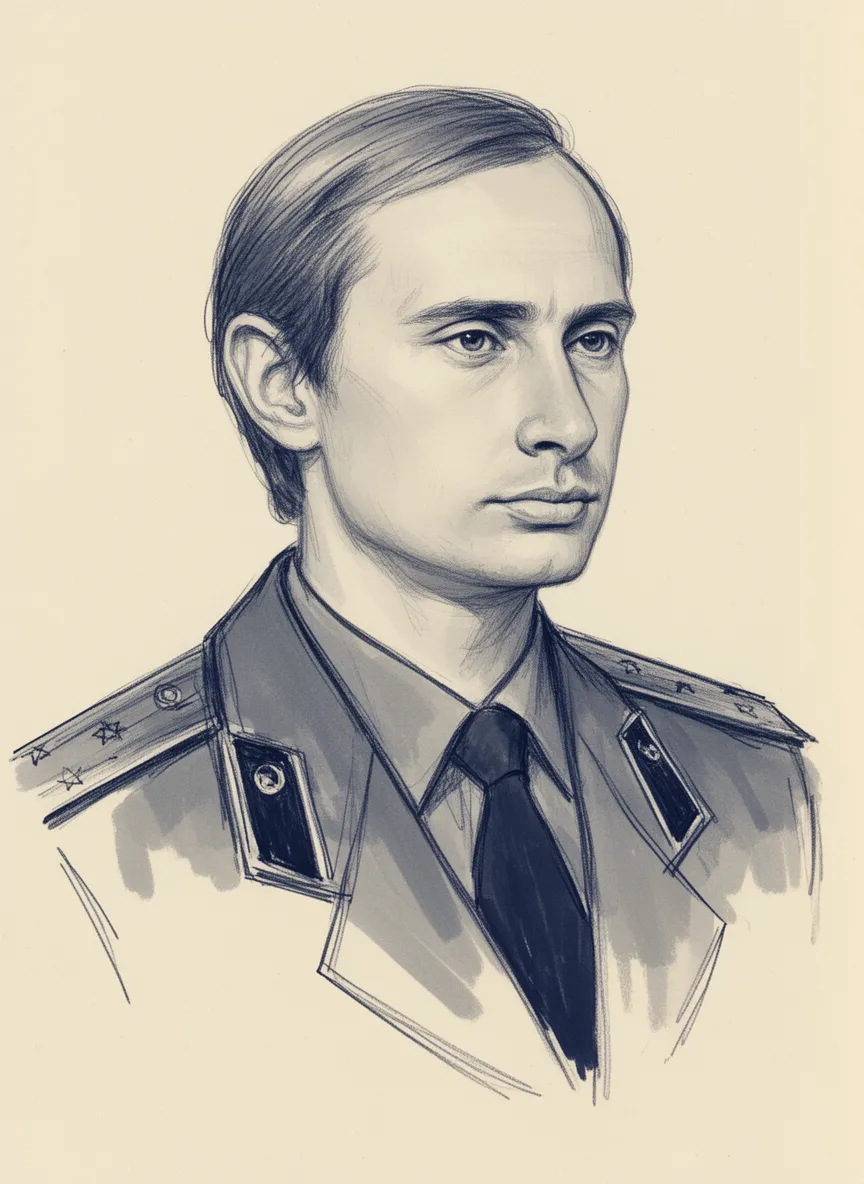
Vladimir Putin on Boris Yeltsin
Vladimir Putin's perspective on Boris Yeltsin is characterized by a mixture of public respect, particularly following Yeltsin's death, and an implied critique of the era he presided over. Putin consistently portrays Yeltsin as a brave, courageous leader who took immense personal responsibility for Russia's path during a pivotal transition period.
On one hand, Putin credits Yeltsin with crucial foundational steps for modern Russia, such as the adoption of a new constitution that prioritized human rights and enabled freedom of speech and private property.
Conversely, Putin has also described the dissolution of the Soviet Union, which occurred under Yeltsin's watch, as the "greatest tragedy ever" to befall the country, suggesting a divergence from the trajectory Yeltsin set regarding state power and sovereignty. This duality allows Putin to honor the predecessor who brought him to power while justifying his own course correction.
Context
Vladimir Putin's view on Boris Yeltsin is critical because Yeltsin appointed him to power, making their relationship foundational. Yeltsin's presidency is largely associated with the turbulent nineties, marked by economic chaos, rampant corruption, and the unsuccessful war in Chechnya, which contrasts sharply with Putin's later emphasis on stability and state control.
Yeltsin's legacy remains contradictory in Russia; while he is credited by some with instituting democratic rights, others blame him for the country's post-communist transformation failures. Putin's statements often navigate this by highlighting the former president's democratic reforms while downplaying the associated chaos, thereby legitimizing his own consolidation of power.
Timeline
- Boris Yeltsin dramatically resigned, naming Vladimir Putin as acting president, which Putin later acknowledged gave him an immeasurable head start in the subsequent election.
- In an interview, Putin appealed to Russians to adopt a 'very kind and humane attitude' towards the first president.
- Upon Yeltsin's death, Putin declared a day of national mourning, remembering him as a 'warm-hearted, spiritual person' and a 'brave and direct national leader.'
- On the first anniversary of Yeltsin's death, Putin honored him as 'a strong, courageous leader of Russia' and an 'example to us all.'
- When questioned about whether he had succeeded in 'taking care of Russia' as Yeltsin instructed, Putin contrasted the post-Soviet period with his own goal of ensuring Russian sovereignty, implying Yeltsin's era led toward a loss of sovereignty.
Key Quotes
Yeltsin was without exaggeration one of these unique people.
In this sense, Yeltsin was an example to us all and such a strong, principled position from the head of state, I am sure will be a standard for the future.
We will do everything to ensure that the memory of Boris Nikolayevich Yeltsin, his noble thoughts and his words “take care of Russia” will always act as our moral and political watchwords.
He was an upstanding and courageous national leader. And he was always very honest and frank while defending his position.
Comparison
- Democratic Beginnings vs. Current Control: Putin praises Yeltsin for introducing freedom of speech and private property, yet Yeltsin's legacy is contrasted with the current administration's perceived squeezing of personal freedoms.
- Sovereignty: Putin frames his own work as reversing the trend toward a total loss of sovereignty evident in the post-Soviet era, suggesting Yeltsin's path was detrimental to state independence.
- Succession: Putin directly acknowledges that Yeltsin's decision to resign gave him a significant "head start" in the presidential campaign, confirming a hand-picked succession.
Sources7
Putin pays tribute to Yeltsin as "example to us all"
* This is not an exhaustive list of sources.