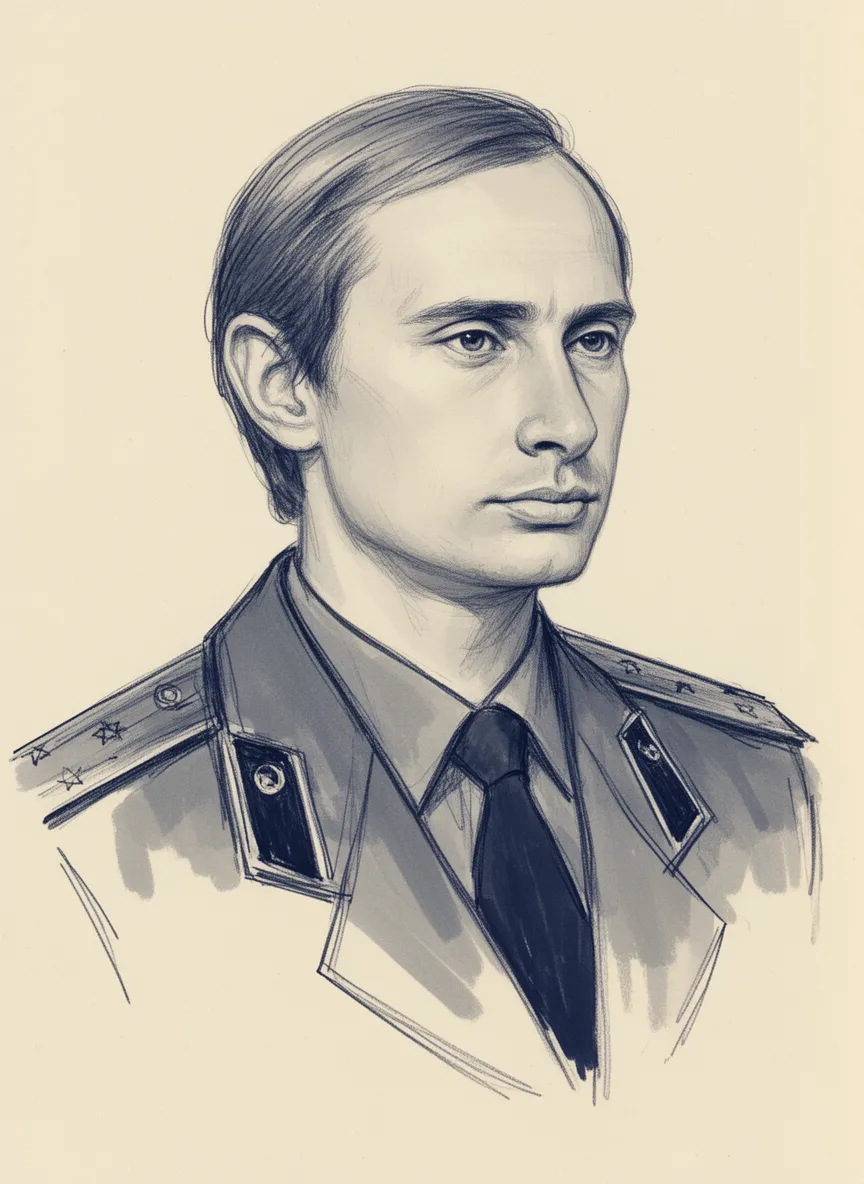
Vladimir Putin on Climate Change
Vladimir Putin holds a nuanced stance on climate change, characterized by a public commitment to international frameworks alongside underlying skepticism and a focus on national economic realities.
He has acknowledged the issue as a global challenge and stated Russia's commitment to building a carbon-neutral economy by 2060, while also taking part in summits like the US-organized Leaders Summit on Climate in 2021 to present Russia's efforts.
Conversely, Putin has argued that hydrocarbons and nuclear energy are essential for humanity's survival and has suggested that climate change concerns from the West are sometimes driven by competitive interests rather than pure environmental fears. His skepticism has also extended to specific green renewables, questioning their practicality and expressing concern over impacts like harm to birds from wind turbines.
Timeline
- When asked about signing the Kyoto Protocol, Putin famously suggested that a warming climate might actually benefit Russia, citing potential lower heating costs and increased grain harvests.
- In a shift of tone, Putin acknowledged climate change as “one of the gravest challenges humanity is facing” during a UN address.
- Putin stated that climate change is inevitable but not caused by human activity, suggesting natural or cosmic cycles are to blame, which reversed his 2015 position.
- At an investment forum, he argued that civilization cannot survive without hydrocarbons, nuclear energy, and hydropower, framing opposing views as driven by foreign competitive interests.
- Speaking at the Leaders Summit on Climate, Putin emphasized international cooperation and announced a top priority task to substantially limit cumulative emissions by 2050.
- While sending a video address to COP26, he reiterated Russia's commitment to build a carbon-neutral economy by 2060.
Actions Taken
- Policy Goal SettingAnnounced a priority task in the Federal Assembly Address to substantially limit cumulative emissions in Russia by 2050.
- International CommitmentReiterated Russia's commitment to build a carbon-neutral economy by 2060, conveyed via video address to COP26.
- LegislationRussia is implementing modern legislation to control carbon emissions and stimulate their reduction, in line with the Paris Agreement.
- Economic DiplomacyStated Russia's willingness to propose joint projects and discuss incentives for foreign investment in clean technology.
Key Quotes
"Without hydrocarbons, without nuclear energy, without hydropower, we simply will not be able to save our civilisation."
"Will people feel comfortable on a planet dotted with windmills and covered with several layers of solar panels?"
"Wind turbines are nice, but why doesn't anyone think about birds? How many birds they kill? They shake so much that worms crawl out of the earth! This is no joke,"
climate change is inevitable, it isn't caused by human activity, and its impacts will be positive for his rapidly-warming country.
Criticism
Putin's stated emission reduction target for 2030, relative to 1990 levels, is seen by some as not requiring major policy shifts because the 1990 figures reflect the economic collapse following the Soviet Union's breakup.
The drop in Russia's emissions since 1990 is attributed by some to the breakup of the Soviet Union and industrial restructuring, rather than concerted governmental environmental efforts.
Sources5
Analysis: Russia's views on climate change
* This is not an exhaustive list of sources.