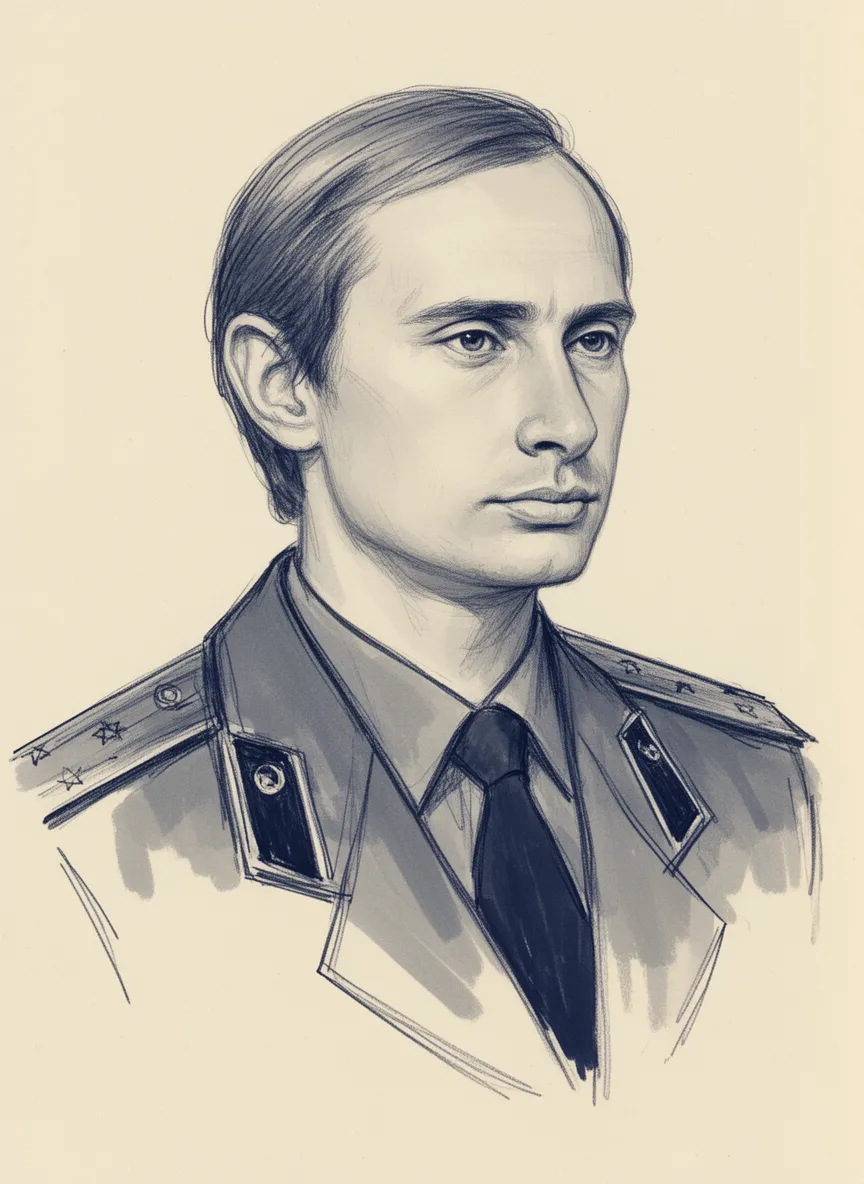
Vladimir Putin on Israel-Palestine conflict stance
Vladimir Putin advocates for a comprehensive resolution to the Israeli-Palestine conflict centered on the establishment of a two-state solution, calling for a Palestinian state alongside Israel, a position Russia has maintained since the Soviet era.
He strongly criticizes the United States' policies, viewing them as having failed to resolve the issue by monopolizing the peace process, and suggests Russia is ready to play a constructive mediator role.
Putin has condemned the violence, describing the fighting in Gaza as a “total destruction of the civilian population,” while acknowledging Israel's right to self-defense following the October 7 attacks. However, he has also drawn criticism for not explicitly condemning Hamas in early statements and for comparing Israel's siege of Gaza to the Nazi blockade of Leningrad, reflecting a nuanced but often critical stance toward Israeli military actions.
To move forward, Vladimir Putin stresses the need to reactivate the Middle East Quartet—comprising the UN, US, EU, and Russia—to resume mediation efforts and address the root political causes of the conflict, rather than relying solely on material offerings or military solutions.
Context
Vladimir Putin's position on the Israel-Palestine conflict is intrinsically linked to Russia’s broader foreign policy goals of challenging US hegemony in the Middle East and positioning Moscow as a key global mediator. Russia seeks to maintain relationships with all major regional players, including Israel, which has a significant Russian-speaking community, while simultaneously bolstering ties with the Palestinian Authority and groups like Hamas.
The conflict's dynamics also see comparisons drawn by Russian officials to Russia's war in Ukraine; for instance, Foreign Minister Lavrov previously linked Russia's goals of 'demilitarization' and 'denazification' in Ukraine to Israel's stated goals against Hamas in Gaza. This linkage highlights how the ongoing Middle East crisis is often framed within Russia's current geopolitical conflicts.
Timeline
- Russian President Medvedev sent an official letter supporting Palestinian statehood to President Abbas.
- Foreign Minister Sergei Lavrov called for an end to the violence during Operation Pillar of Defense.
- Following the Hamas attack, Putin condemned the attacks and asserted Israel's right to defend itself, but criticized the subsequent siege of Gaza.
- Putin blamed the crisis on US policy failure for monopolizing the peace process and not addressing Palestinian interests.
- Putin insisted the Gaza war must conclude with a "full-fledged" Palestinian state and urged the reactivation of the Middle East Quartet for mediation.
Actions Taken
- Diplomatic engagementThe Kremlin stated it was in contact with both Israeli and Palestinian sides to seek a role in resolving the conflict, suggesting mediation efforts.
- Public statement/CondemnationPresident Putin allegedly described the humanitarian catastrophe in Gaza as having a scale that could not be compared to the war in Ukraine during a meeting with Mahmud Abbas.
- Humanitarian aidRussia reportedly offered regular assistance to the Palestinian people amid the conflict.
Key Quotes
What is happening now in Gaza in response to the terrorist attack on Israel, does not resemble a war. It is a kind of total destruction of the civilian population.
The primary solution to the Palestinian problem is the establishment of a fully-fledged Palestinian state. The Russian side has upheld this position since the Soviet era.
I think many people would agree with me that it's a clear example of the failure of US politics in the Middle East.
Criticism
Criticized a Russian-drafted UN Security Council resolution for its failure to condemn Hamas, suggesting it provided 'cover to a terrorist group.'
Sources7
Putin says Gaza war must end with establishment of Palestinian state
Putin says Gaza conflict not a war but ‘total destruction of civilian population’
* This is not an exhaustive list of sources.