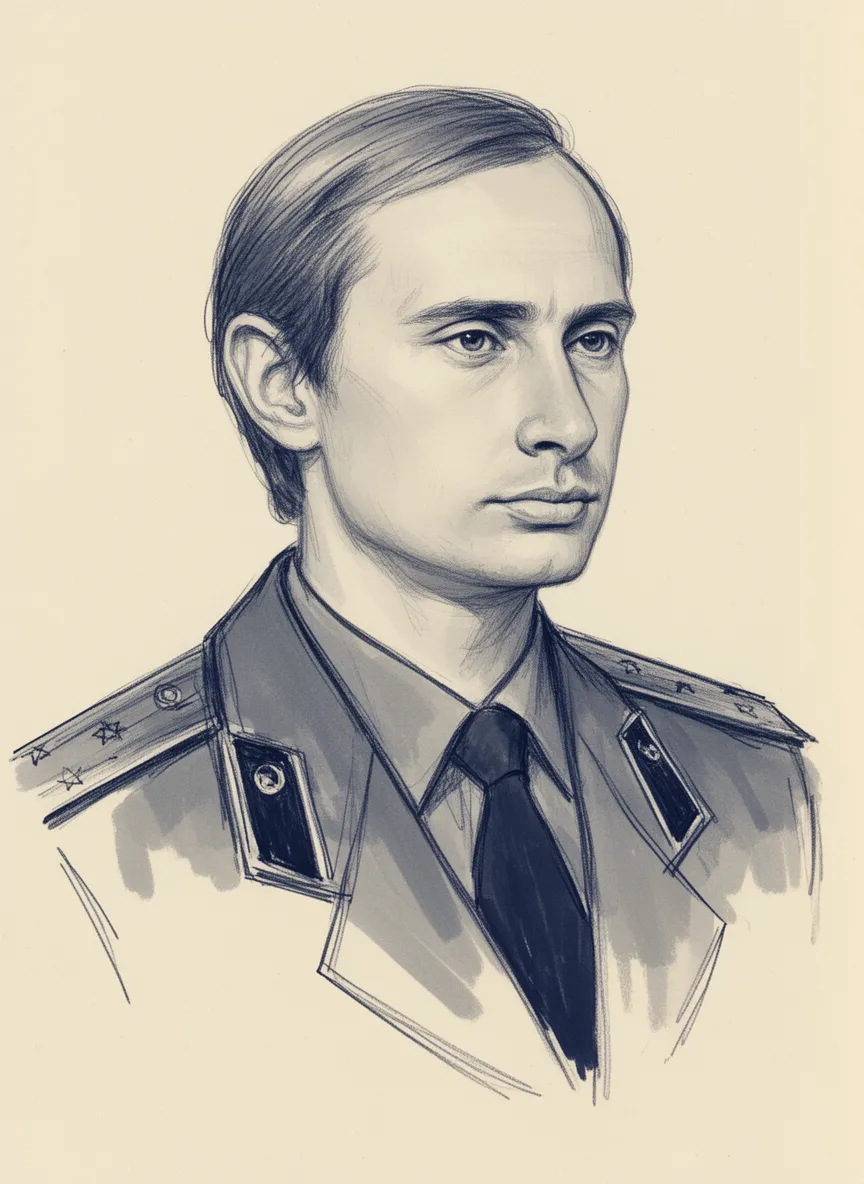
Vladimir Putin on Palestine/Middle East
Vladimir Putin centers the Russian position on the necessity of a two-state solution, asserting that the war in Gaza must conclude with the establishment of a full-fledged Palestinian state. This stance, according to Putin, has been Russia's position since the Soviet Union era, and he has expressed hope for Palestinian statehood. Russia advocates for the reactivation of the Middle East Quartet (UN, US, Russia, EU) to resume mediation efforts, criticizing the US for disrupting this mechanism by monopolizing peace efforts.
Regarding the recent Gaza conflict, Putin condemned the October 7 attacks by Hamas and affirmed Israel's right to self-defense. However, he has also heavily criticized the Israeli response, describing the fighting as a “total destruction of the civilian population” in Gaza, a situation he once compared in scale to the Nazi siege of Leningrad. Moscow has also been careful to denounce violence from both sides, positioning itself as a potential mediator ready to use its longstanding relations with both Israelis and Palestinians to help find a resolution.
Vladimir Putin frequently ties the regional instability to perceived failures of American diplomacy, arguing that Washington monopolized negotiations while ignoring the fundamental interests of the Palestinians, such as the goal of an independent state with East Jerusalem as its capital. Russia maintains friendly relations with Palestinian leadership, including Mahmoud Abbas, and has previously sent humanitarian aid to Palestinians during escalations. The Russian goal is to prevent the conflict from expanding into a wider regional war.
Context
The Palestine/Middle East issue is significant for Vladimir Putin as it provides an avenue to challenge perceived US hegemony in global affairs and strengthen ties with non-Western blocs like BRICS. Russia aims to position itself as a necessary and balanced global mediator, contrasting its approach with that of Washington. Furthermore, Russia has recognized a Palestinian state since the Soviet period, providing historical depth to its current diplomatic posture.
The relationship with Israel is complex; while Putin claims Russia has historically maintained friendly ties with Jerusalem, these relations have been strained by Moscow's invasion of Ukraine. Russia has engaged with Hamas, meeting with its leader Khaled Meshaal in 2006, though Putin reportedly did not consider Hamas a freedom fighter organization at that time.
Timeline
- Vladimir Putin stated he did not consider Hamas a freedom fighter organization.
- President Medvedev sent an official letter supporting Palestinian statehood.
- Russian Foreign Minister Lavrov called for an end to violence during Operation Pillar of Defense, condemning both Israeli actions and disproportionate shelling.
- Following the October 7 attacks, Putin condemned the violence, affirmed Israel's right to defense, but immediately criticized the siege of Gaza and blamed US foreign policy failure.
- Putin told BRICS leaders that the Middle East is on the brink of full-scale war and emphasized that the Gaza war must end with a 'full-fledged' Palestinian state, urging the reactivation of the Middle East Quartet.
Actions Taken
- Humanitarian AidOrdered extra humanitarian aid, consisting of tents, medicines, and food, to be sent to Palestinians during the 2008–09 Gaza conflict.
- Diplomatic SupportSent an official letter of support to Palestinian President Abbas for Palestinian statehood during Operation Pillar of Defense.
Key Quotes
The primary solution to the Palestinian problem is the establishment of a fully-fledged Palestinian state. The Russian side has upheld this position since the Soviet era.
It is necessary to avoid the expansion of the conflict at all cost because if it happens it will have an impact on the international situation.
What is happening now in Gaza in response to the terrorist attack on Israel, does not resemble a war. It is a kind of total destruction of the civilian population.
I think that many people will agree with me that this is a vivid example of the failure of United States policy in the Middle East.
Sources6
Palestine–Russia relations - Wikipedia
* This is not an exhaustive list of sources.