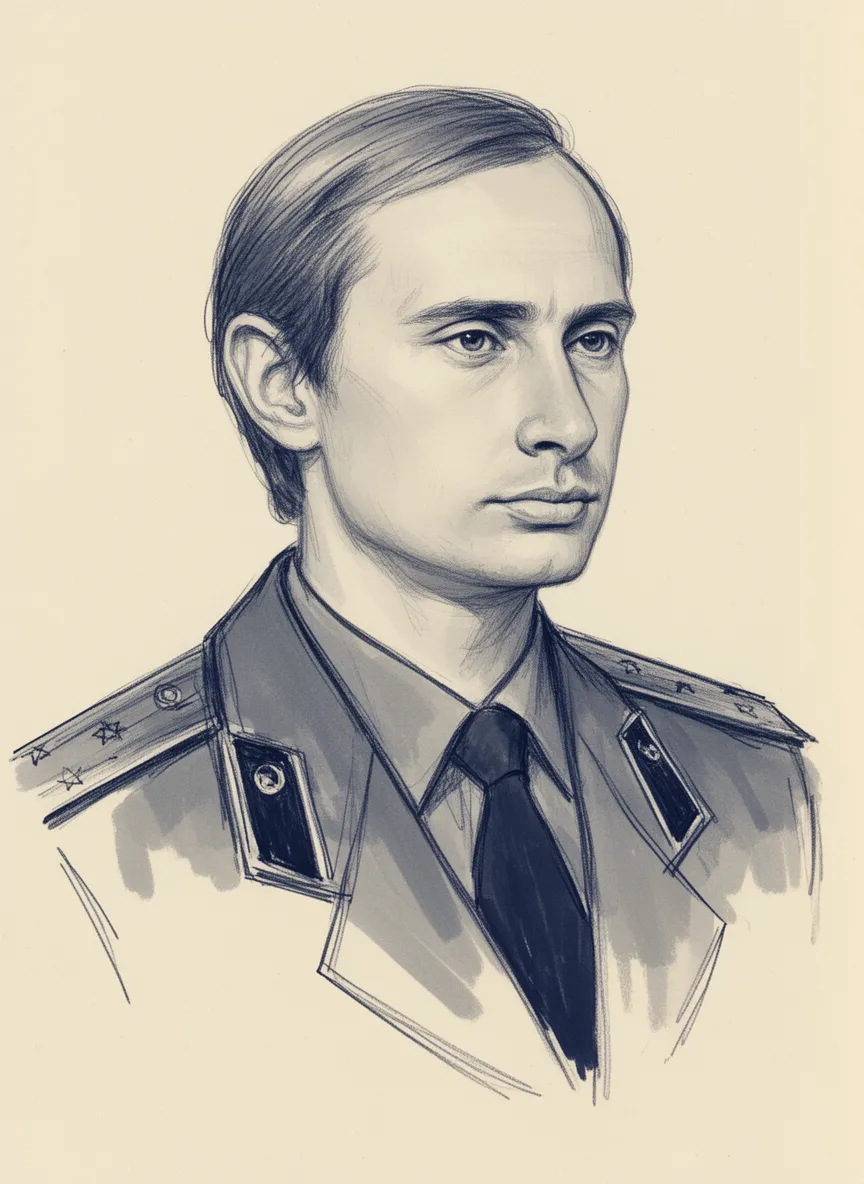
Vladimir Putin on Religion/Orthodoxy
Vladimir Putin regards the Russian Orthodox Church as fundamentally intertwined with the historical and cultural identity of the Russian state. He asserts that Orthodoxy serves as a crucial ideological unit that has historically inspired the people toward constructive action and patriotic deeds for the Fatherland. Putin’s approach is often characterized as utilitarian, seeing the Church as a vital partner whose role is to manage the faithful and actively support the state's objectives.
This alignment extends to domestic policy, where his invocation of religious themes has helped re-establish a sense of cultural unity after the Soviet collapse, consolidating state power. Furthermore, Putin employs religious messaging to frame Russia against a perceived morally decaying West, promoting conservative values that bolster domestic cohesion and support his geopolitical claims.
His relationship with the Church is symbiotic, seeing the institution leverage its moral authority to advance its own interests, such as promoting Orthodox unity and Russian imperialism, which dovetails with Putin’s political ambitions. Putin attends major religious services and actively promoted the 2007 Act of Canonical Communion, reuniting the Moscow Patriarchate with the Russian Orthodox Church Outside Russia after an 80-year schism.
Context
The topic of religion, specifically the Russian Orthodox Church (ROC), is highly relevant to Vladimir Putin as it relates directly to his project of re-crafting Russian national identity post-Soviet collapse. Historical precedent shows the Church held immense power, sometimes rivaling the Tsar, controlling much of Russian cultural life. Putin appears to consciously adopt this historical role of the state leader being intrinsically linked to the spiritual leader. His policy framework often positions the ROC as the moral guardian of Russia against perceived Western liberalization and decadence.
Actions Taken
- Church State ReconciliationActively promoted the Act of Canonical Communion with the Moscow Patriarchate, signed on 2007-05-17, which formally restored relations between the Moscow-based Russian Orthodox Church and the Russian Orthodox Church Outside Russia.
- Legislation/Religious ControlPassed legislation, such as in 2016, limiting evangelism, which was intended to curtail the influence of other faiths and cement the grip of the Russian Orthodox Church.
- Honors/EndorsementRepeatedly awarded the highest state awards to the head of the Russian Orthodox Church, Patriarch Kirill, signaling high-level state endorsement.
Key Quotes
it is hard to disagree with those who argue that without Christianity without the Orthodox faith without the culture that arose on their foundation Russia would hardly have come into being therefore today as we rediscover ourselves and seek the moral foundations of our life returning to these original sources is very important very useful and timely.
We see many of the Euro-Atlantic countries are actually rejecting their roots, including the Christian values that constitute the basis of western civilisation. They are denying the moral principles and all traditional identities: national, cultural, religious and even sexual.
Criticism
Called for states to view Patriarch Kirill and his church's leadership as extensions of Vladimir Putin's regime, treating them as complicit in war crimes and crimes against humanity, particularly regarding the 'Russkiy Mir' ideology.
Argue that Putin's frequent religious expressions are disingenuous given his actions, such as ordering the bombing of civilians, suggesting he merely uses the Church as a propaganda tool.
Sources6
Vladimir Putin - Wikipedia
* This is not an exhaustive list of sources.