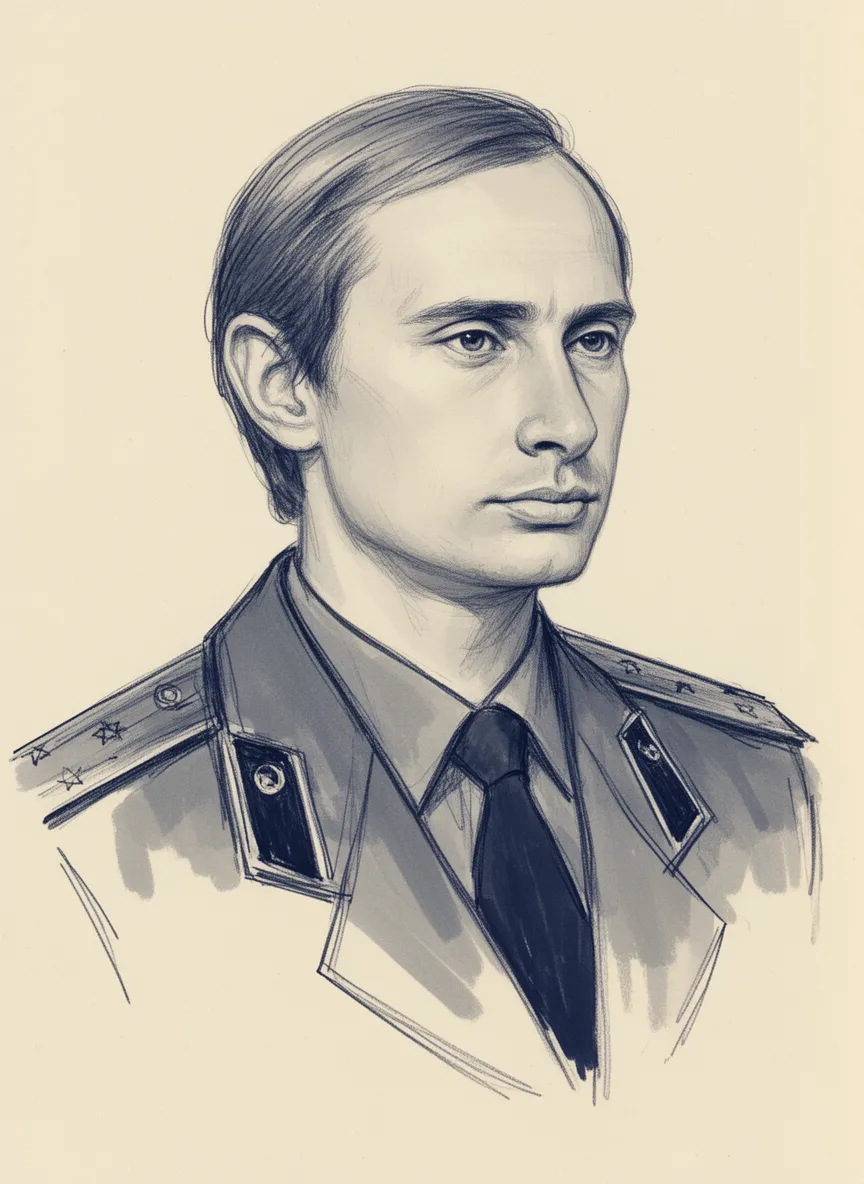
Vladimir Putin on Soviet Union/Communism
Vladimir Putin views the dissolution of the Soviet Union in 1991 with deep regret, labeling it the "greatest geopolitical catastrophe" of the 20th century on multiple occasions. He has stated he would reverse this event if given the chance to alter modern Russian history, often linking the collapse to the demise of what he terms "historical Russia." This sentiment appears aimed at resonating with nostalgic segments of the Russian population.
Conversely, Putin has been critical of the Communist ideology's practical application within the USSR, specifically blaming Vladimir Lenin for planting a "time bomb" under the state through decisions regarding territorial autonomy. He argued that the state's foundation was weak because it was built on violence rather than law, and it fell apart when the Communist Party's control weakened.
Despite his criticism of the system's execution, Putin has indicated a lingering appreciation for the underlying principles. He stated that he was very fond of Communist and socialist ideas and still holds that fondness, drawing comparisons between the Moral Code of the Builder of Communism and the Bible due to concepts like brotherhood and equality. However, he also acknowledged the Soviet era began with repressions.
Context
Vladimir Putin's background as a former KGB officer deeply informed his relationship with the Soviet Union and its ideology. His service within the Soviet state's security apparatus means he was a part of the system whose collapse he now laments. This personal history is often invoked when discussing his views on state strength and national identity.
His position on the Soviet collapse is seen by analysts as a key to understanding current geopolitical moves, particularly concerning neighboring states like Ukraine. The demographic dispersal and loss of influence following 1991 are frequently cited as drivers for his foreign policy intentions and the assertion of Russian power beyond its current borders.
Timeline
- In an early interview shortly after the USSR's formal dissolution, Putin acknowledged that the Soviet period could not be erased from history but criticized Communism for causing "enormous damage" to Russia.
- President Putin labeled the Soviet collapse as the "biggest geopolitical catastrophe of the century," emphasizing the drama of millions of Russians ending up outside Russian territory.
- While criticizing Lenin for the collapse, Putin affirmed his continued liking for Communist and socialist ideas and mentioned keeping his USSR membership ticket at home.
- When asked directly what historical event he would reverse, Putin named the collapse of the Soviet Union, suggesting a desire to restore its geopolitical structure.
- In a documentary, Putin framed the Soviet breakup as the demise of "historical Russia" and detailed personal hardship, including having to drive a taxi for extra money.
Key Quotes
The collapse of the Soviet Union.
the collapse of the Soviet Union was a major geopolitical disaster of the century.
It was the disintegration of historical Russia under the name of the Soviet Union.
I liked Communist and socialist ideas very much and I like them still.
Lenin was a destroyer of a thousand years of history whose priority was revolution and destruction.
Comparison
- Lenin: Putin frequently criticizes Lenin, blaming him for creating structural weaknesses (like the right to secession) that led to the USSR's breakup, contrasting with praise for the socialist ideas themselves.
- Stalin: Putin has criticized Joseph Stalin on specific actions, such as the Red Terror and territorial concessions, though he has also reinstated Stalin-era traditions, like the national fitness program, suggesting a selective historical embrace.
- Capitalism/Radical Reformers: Putin has occasionally signaled a move away from Communism by associating with capitalist factions in his early career or speaking positively about free-market concepts to certain audiences, indicating a pragmatic, rather than purely ideological, approach.
Sources5
Putin regrets collapse of Soviet Union
* This is not an exhaustive list of sources.