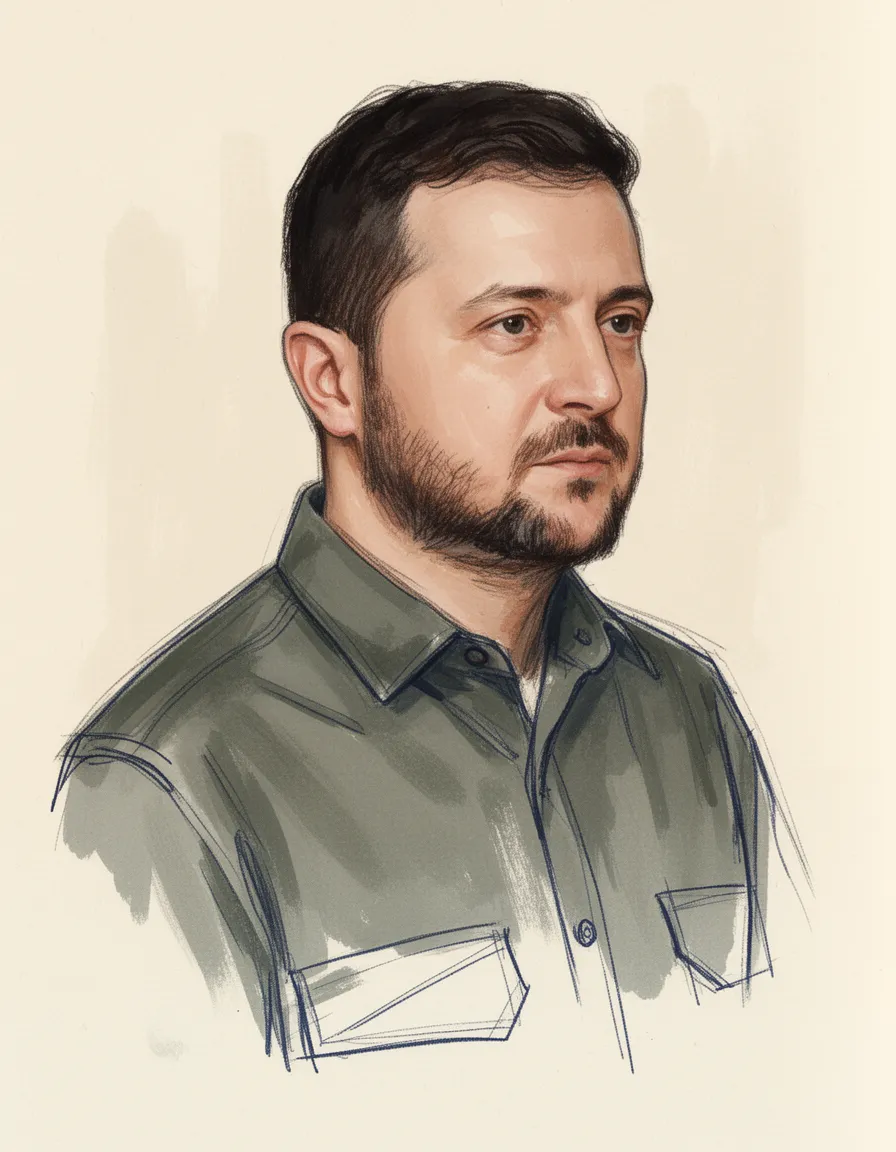
Volodymyr Zelenskyy on Economic Policy
Volodymyr Zelenskyy's stated approach to Economic Policy centers on stimulating growth primarily by attracting investment to Ukraine. This goal was intrinsically linked to his promise of a "restart of the judicial system" to build domestic and international confidence in the state's institutions.
During his 2019 campaign, Zelenskyy proposed a tax amnesty alongside a 5-per-cent flat tax for big business, with the potential for this rate to increase after dialogue with the business community. He linked improved tax compliance to the public observing an honest performance from his new government from the outset.
Views on specific popular economic measures, such as lowering communal tariffs, were treated more cautiously by his team. A representative suggested that Zelenskyy's comments on potential gas price reductions were more of a "half-hinting" and "joking" nature rather than a direct, binding promise.
Context
Volodymyr Zelenskyy ran for president in 2019 as an anti-establishment figure, positioning himself as someone who would clean up government and restore trust. Economic policy was a key area where voters expected change, particularly regarding corruption and the power of wealthy oligarchs.
His administration's focus was immediately complicated by the ongoing conflict in the Donbas and later by the full-scale Russian invasion in 2022, which necessarily shifted priorities toward wartime survival and securing international financial support over long-term domestic economic reforms.
Actions Taken
- Legislation/Anti Oligarch ReformSubmitted a bill creating a public registry of oligarchs, banning them from privatizations and political financing, a key move to reshape the economic structure.
- Legislation/Media ControlHis administration passed reforms to media laws intended to reduce the dominance of Ukrainian oligarchs in television and radio broadcasting.
- Wartime MobilizationFollowing the full-scale invasion, Zelenskyy banned men of conscription age (18-60) from leaving Ukraine as part of mobilization efforts.
Key Quotes
He also proposed a tax amnesty and a 5-per-cent flat tax for big business which could be increased "in dialogue with them and if everyone agrees".
Zelenskyy stated that as president he would develop the economy and attract investment to Ukraine through "a restart of the judicial system" and restoring confidence in the state.
Criticism
Stated that Zelenskyy had never formally promised to lower communal tariffs, clarifying campaign remarks were not a direct pledge.
Criticized the approach to the oligarch registry, arguing that centralizing power in the President made the measure potentially dangerous and ineffective against deep-rooted corruption.
Sources4
- Zelenskyy stated that as president he would develop the economy and attract investment to Ukraine through "a restart of the judicial system" and restoring confidence in the state.
- He also proposed a tax amnesty and a 5-per-cent flat tax for big business which could be increased "in dialogue with them and if everyone agrees".
- In a June 2019 interview with BIHUS info, a representative of the president of Ukraine at the Cabinet of Ministers, Andriy Herus stated that Zelenskyy had never promised to lower communal tariffs, but that a campaign video in which Zelenskyy stated that the price of natural gas in Ukraine could fall by 20–30 percent or maybe more was not a direct promise but actually "half-hinting" and "joking".
- In June 2021, Zelenskyy submitted to the Verkhovna Rada a bill creating a public registry of Ukraine's oligarchs, banning them from participating in privatizations of state-owned companies and forbidding them from contributing financially to politicians.
* This is not an exhaustive list of sources.